
Space-saving design for tiny homes presents a unique challenge: creating comfortable and functional living spaces within remarkably limited square footage. This necessitates innovative approaches to furniture selection, storage solutions, and overall home layout. The principles of maximizing vertical space, utilizing multi-functional furniture, and employing clever storage techniques become paramount in achieving a livable and aesthetically pleasing tiny home.
This exploration delves into the core strategies employed to optimize space in tiny homes, examining everything from efficient kitchen and bathroom designs to the strategic use of color and lighting to enhance the perception of spaciousness. We’ll consider the practical applications of various space-saving techniques, offering readers a comprehensive understanding of the design considerations involved in creating a successful tiny home.
Defining Space-Saving Design in Tiny Homes
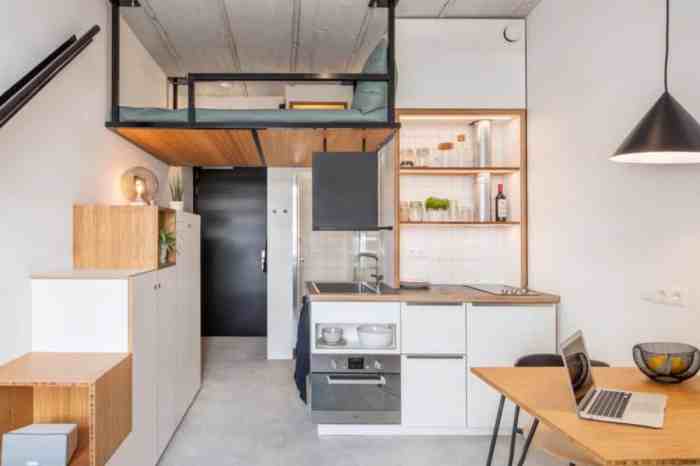
Space-saving design in tiny homes is a holistic approach to maximizing functionality and comfort within a severely limited square footage. It prioritizes efficient use of every inch, often employing clever storage solutions, multi-functional furniture, and a streamlined aesthetic to create a sense of spaciousness despite the small size. The core principles revolve around thoughtful planning, clever use of vertical space, and a minimalist approach to possessions.Space-saving design in tiny homes necessitates a departure from traditional home layouts.
Instead of sprawling rooms and hallways, the focus shifts to integrating living areas seamlessly and prioritizing functionality over superfluous space. This approach demands creative problem-solving and a willingness to embrace unconventional design solutions.
Maximizing Vertical Space in Tiny Homes
Efficient use of vertical space is paramount in tiny home design. This involves utilizing wall-mounted shelving units for storage, incorporating loft beds to free up floor space, and employing pull-down desks or tables that can be stored away when not in use. Tall, narrow cabinets are preferred over wide, shallow ones, and overhead storage is maximized to take advantage of often-unused space.
For example, a loft bed can create a sleeping area above a living space, effectively doubling the functionality of the area. Similarly, wall-mounted fold-down desks transform a living space into a home office in seconds.
Challenges of Designing for Limited Square Footage
Designing for limited square footage presents several unique challenges. One major obstacle is balancing functionality with aesthetics; every item must serve a purpose, and careful consideration must be given to the flow of the space. Storage is always a primary concern, requiring creative solutions to accommodate all necessities within a confined area. Additionally, maintaining a sense of spaciousness and avoiding a cluttered feeling requires careful planning and selection of materials and color palettes.
Ventilation and proper lighting are also critical to ensure a comfortable living environment within a compact space. Plumbing and electrical systems also need careful planning to fit within the smaller space, often requiring compact and energy-efficient appliances.
Comparison of Traditional and Tiny Home Layouts
| Feature | Traditional Home | Tiny Home | Difference |
|---|---|---|---|
| Living Space | Separate living room, dining room, kitchen | Combined living, dining, and kitchen area | Open-plan design maximizes space; multifunctional furniture is common. |
| Bedrooms | Multiple bedrooms, often with ensuite bathrooms | One or two small bedrooms, sometimes loft bedrooms; shared bathroom | Significant reduction in bedroom size and number; shared spaces are more common. |
| Bathrooms | Separate bathroom with bathtub/shower, toilet, and sink | Compact bathroom with shower/tub combo, toilet, and sink; potentially composting toilet | Reduced size and inclusion of space-saving fixtures; sometimes use of alternative plumbing systems. |
| Storage | Abundant closet and storage space throughout the home | Built-in, multi-functional storage; vertical storage solutions; minimal possessions | Significant reduction in storage space; requires creative and efficient storage solutions. |
Furniture and Fixture Selection for Space Optimization
Choosing the right furniture and fixtures is paramount in maximizing the functionality and livability of a tiny home. Space is at a premium, so every piece must serve a purpose and contribute to a comfortable, yet uncluttered, living environment. Careful consideration of both size and functionality is key to success.
Multi-functional furniture is essential for efficient space utilization in tiny homes. Instead of individual pieces dedicated to single tasks, opting for items that perform multiple roles significantly reduces the overall footprint while maintaining comfort and convenience. This approach allows for a more streamlined and flexible living space.
Examples of Space-Saving Furniture and Fixtures
Several furniture types are specifically designed to optimize space in small dwellings. Murphy beds, for example, fold neatly into the wall, transforming a sleeping area into a living space during the day. Fold-down tables, similarly, can be stored away when not in use, freeing up valuable floor space. Other examples include ottomans with built-in storage, sofa beds that serve as both seating and sleeping areas, and nesting tables that can be tucked away when not needed.
Ladder shelving units utilize vertical space efficiently, while convertible furniture such as a desk that folds into a wall unit further conserves space.
Sample Furniture Arrangement for a 200 sq ft Tiny Home
Consider a 200 sq ft tiny home with an open-plan layout. A Murphy bed in one wall would provide sleeping space without dominating the room. Opposite the bed, a fold-down wall-mounted table could serve as a dining area or workspace, easily stored away when not needed. Underneath the table, a built-in bench with storage could offer extra seating and storage.
A small, multi-purpose sofa could be placed near the table, doubling as additional seating and potentially a guest bed. Vertical shelving would maximize wall space for storage, and a compact kitchen unit would be strategically positioned to minimize movement and maximize workspace efficiency. This arrangement ensures maximum flexibility and functionality within the limited space.
Essential Furniture Pieces for a Tiny Home
Prioritizing compact and multifunctional options is crucial when selecting furniture for a tiny home. The following list represents a streamlined approach to furnishing a tiny home while maintaining comfort and practicality.
- Murphy bed or a compact sofa bed
- Fold-down or wall-mounted table
- Multi-functional storage ottoman
- Vertical shelving unit
- Compact kitchen unit with integrated appliances
- Space-saving wardrobe or closet system
Ultimately, successful space-saving design in tiny homes is about more than just fitting everything in; it’s about creating a harmonious and functional living environment that feels spacious and inviting despite its compact size. By thoughtfully integrating space-saving and space-enhancing techniques, homeowners can transform a small space into a comfortable and personalized haven, proving that size is not a barrier to comfortable living.
The careful consideration of layout, furniture, storage, and aesthetics allows for the creation of truly remarkable and efficient tiny homes.
User Queries
What are the biggest mistakes people make when designing a tiny home?
Common mistakes include insufficient storage planning, neglecting natural light, choosing oversized furniture, and failing to account for proper ventilation.
How can I make my tiny home feel more spacious?
Use light colors, maximize natural light, strategically place mirrors, and employ clever architectural details to create an illusion of more space.
What are some affordable space-saving options for tiny homes?
DIY storage solutions, repurposed furniture, and utilizing readily available, cost-effective materials can significantly reduce expenses.
Are tiny homes suitable for families?
With careful planning and creative design, tiny homes can accommodate families, though careful consideration of storage and living space is crucial.


