
Transforming a small bedroom into a functional and stylish haven is achievable with creative space-saving strategies. This exploration delves into maximizing vertical space, utilizing multifunctional furniture, implementing clever storage solutions, and embracing minimalist design principles to create a bedroom that feels both spacious and inviting. We’ll cover practical tips and design ideas to help you optimize your space and create a relaxing retreat, regardless of the size of your room.
From cleverly designed shelving units to innovative storage solutions and the strategic use of mirrors and lighting, we will guide you through a range of techniques to enhance your bedroom’s perceived size and functionality. We’ll also discuss the pros and cons of various space-saving furniture options, ensuring you make informed decisions to best suit your needs and aesthetic preferences.
Maximize Vertical Space
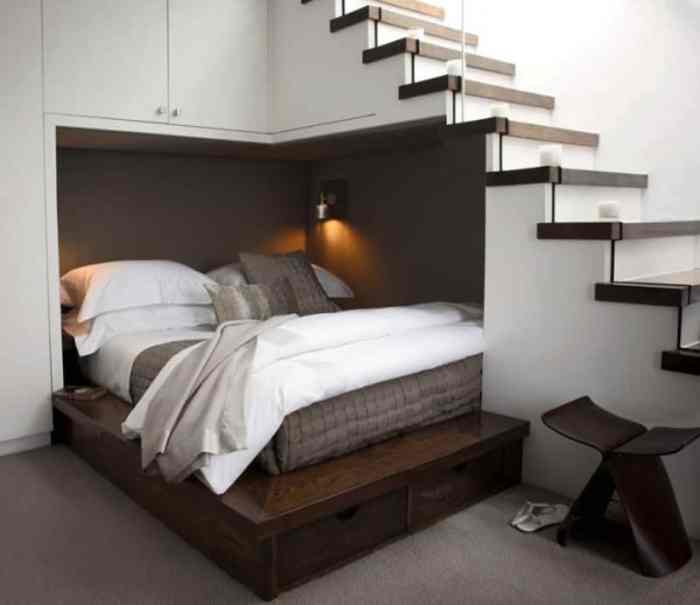
Efficiently utilizing vertical space is crucial for creating a spacious feel in a small bedroom. By strategically incorporating tall storage solutions and loft-style furniture, you can significantly increase storage capacity and open up floor space. This approach transforms unused vertical areas into functional and aesthetically pleasing elements within your bedroom design.
Tall, Narrow Shelving Units
Tall, narrow shelving units that reach the ceiling offer a substantial increase in storage capacity without overwhelming the room. Consider units approximately 72 inches (6 feet) tall, 12 inches deep, and 36 inches wide. These dimensions allow for ample storage while maintaining a slim profile. Materials such as lightweight yet sturdy particleboard with a laminate finish are cost-effective and easy to maintain.
Alternatively, solid wood offers a more premium aesthetic and durability, though it will be more expensive and heavier. The choice of material will depend on your budget and desired aesthetic. Careful placement of these units, perhaps flanking a bed or along a wall, can maximize their impact while minimizing their visual dominance.
Loft Beds and Bunk Beds
Loft beds or bunk beds significantly increase usable floor space by elevating the sleeping area. The space underneath can be transformed into a workspace, a study area with a desk and chair, or additional storage. For instance, a loft bed with a 6-foot height could easily accommodate a small desk and chair underneath, creating a functional study nook. Loft bed styles vary widely; a simple platform style is suitable for smaller bedrooms, while more elaborate designs with built-in storage or desks are ideal for larger spaces.
Bunk beds are a great option for sharing a room, allowing each person to have their own sleeping area and maximizing space underneath for shared storage. Consider the overall bedroom dimensions when choosing between a loft bed or bunk bed; a loft bed is generally suitable for rooms at least 10ft x 10ft to ensure adequate headroom and floor space below.
Utilizing Space Above a Closet Door
The often-neglected space above a closet door provides a surprisingly useful storage area. Imagine a space approximately 80 inches (height of a standard door) x 30 inches (standard door width) x 12 inches (depth). This area can be utilized by installing a custom-built shelf or a series of smaller shelves within a shallow cabinet. This shallow cabinet could be made from lightweight wood or even sturdy cardboard, providing a discreet and efficient solution for storing items like seasonal clothing, extra linens, or seldom-used items.
A simple visual representation would show a white, hinged cabinet attached to the top of a standard closet door, slightly recessed to avoid obstructing the door’s opening. This cabinet would have multiple small shelves, clearly showing its efficient use of otherwise wasted space. The hinges would allow for easy access to the contents within.
Multifunctional Furniture
Maximizing space in a small bedroom often requires creative solutions, and multifunctional furniture plays a crucial role in achieving this. By cleverly combining the functions of several pieces into one, you can significantly reduce clutter and optimize the available area. This section explores various options, their advantages, and considerations for seamless integration into your bedroom design.
Multifunctional Furniture Options for Small Bedrooms
Choosing the right multifunctional furniture can transform a cramped bedroom into a comfortable and organized space. The following table Artikels several excellent options:
| Item | Description | Benefits | Dimensions (Approximate) |
|---|---|---|---|
| Murphy Bed | A bed that folds vertically into a wall unit or cabinet, often incorporating storage space. | Saves significant floor space when not in use; provides built-in storage. | Varies greatly depending on model and configuration; typically 6-8 ft wide when unfolded. |
| Sofa Bed | A sofa that converts into a bed, providing seating during the day and sleeping space at night. | Offers both seating and sleeping functionality in one piece; relatively compact. | Varies greatly depending on size; typically 6-8 ft wide when unfolded. |
| Storage Ottoman/Trunk | An upholstered ottoman or wooden trunk with internal storage space. | Provides extra seating and valuable storage for blankets, clothes, or other items; visually appealing. | Varies greatly depending on size; typically 2-4 ft wide. |
| Under-Bed Storage Drawers | Drawers that slide out from under the bed, providing hidden storage. | Maximizes space under the bed; keeps items organized and out of sight. | Varies depending on bed size; usually the length of the bed. |
| Desk with Hidden Storage | A writing desk with drawers or compartments to conceal office supplies and personal items. | Provides a workspace and storage; maintains a tidy look. | Varies depending on size; typically 3-5 ft wide. |
Murphy Bed vs. Sofa Bed: A Practical Comparison
Murphy beds and sofa beds both offer space-saving solutions, but they differ in practicality, comfort, and aesthetics. Murphy beds provide superior space-saving capabilities, completely disappearing into the wall when not needed. However, they can be more complex to install and may be less comfortable than a dedicated bed. Sofa beds, while less space-saving, are generally more comfortable and easier to use daily.
Aesthetically, both options offer a variety of styles, but Murphy beds can be more easily integrated into a room’s design with custom cabinetry. The choice depends heavily on individual needs and preferences, considering frequency of use and personal comfort priorities.
Storage Ottoman/Trunk Design and Functionality
Storage ottomans and trunks serve as both seating and storage solutions. These pieces can be designed in various styles and materials to complement any bedroom décor. A simple wooden trunk with a hinged lid offers a classic and rustic look, while an upholstered ottoman with button tufting provides a more modern and comfortable feel. Materials can range from solid wood and leather to fabric and faux leather, offering a wide array of choices to suit different aesthetics and budgets.
The internal storage space can be utilized for blankets, pillows, extra bedding, or seasonal clothing, keeping these items neatly tucked away while still offering functional seating.
Clever Storage Solutions
Optimizing storage is paramount in a space-saving bedroom. By implementing clever storage solutions, you can significantly increase functionality and maintain a clutter-free environment, even within a small footprint. This involves maximizing existing spaces and employing innovative storage methods to keep belongings organized and easily accessible.
Optimizing Closet Space
Efficient closet organization is crucial for maximizing space. A well-planned system utilizes vertical space and incorporates organizers to prevent items from becoming jumbled. Consider installing adjustable shelving to accommodate items of varying heights, from folded clothes to shoes and handbags. Utilize shelf dividers to separate stacks of folded items, preventing them from toppling over and making it easier to locate specific garments.
Hanging organizers with multiple compartments can help with maximizing vertical space and separating items like scarves, belts, or accessories. For shoes, consider tiered shoe racks or over-the-door shoe organizers to store them vertically, saving valuable floor space. Vacuum-sealed storage bags can significantly reduce the volume of bulky items like seasonal clothing or bedding, freeing up considerable space within the closet.
Imagine a closet transformed: the top shelf holds neatly stacked sweaters divided by shelf dividers; the middle section features hanging clothes organized by type and color; the bottom features a tiered shoe rack, and the door holds a hanging organizer for accessories. This visual representation demonstrates the efficiency of a well-organized closet.
Efficient Bedding and Seasonal Clothing Storage
Storing bedding and seasonal clothing efficiently requires a strategic approach. This involves using space-saving techniques and choosing appropriate storage solutions.
- Utilize under-bed storage containers (discussed further below) for out-of-season clothing. This keeps them protected from dust and moisture while freeing up valuable closet space.
- Employ vacuum-sealed bags to compress bulky items like blankets, comforters, and sweaters, minimizing their storage volume significantly.
- Store bedding sets together in matching fabric storage bags or containers to maintain organization and prevent mixing.
- Consider vertical storage solutions like shelf dividers in closets or dressers for neatly stacking folded items like sweaters and t-shirts.
- For seasonal clothing, use clear storage bins to easily identify contents without having to rummage through them.
Following these steps creates a system where seasonal clothing is stored compactly and bedding is readily accessible.
Under-Bed Storage Solutions
Under-bed storage offers substantial untapped potential in a small bedroom. Choosing the right containers is key to maintaining organization and preventing items from getting lost or damaged.
- Plastic storage bins with lids: These are ideal for storing items that need protection from dust and moisture, such as sweaters, extra linens, or off-season shoes. Clear bins allow for easy identification of contents. Labeling the bins further enhances organization.
- Vacuum-sealed bags: These are excellent for compressing bulky items like blankets, comforters, or bulky clothing to save space. Remember to clearly label these bags to easily identify their contents.
- Fabric storage bins: These are a softer alternative to plastic bins and work well for items that are less sensitive to moisture or dust. They are often collapsible for easy storage when not in use.
- Rolling storage containers: These are particularly helpful for storing heavier items, as they have wheels for easy access and movement under the bed.
Maintaining organization in under-bed storage requires consistent effort. Regularly check the contents to ensure everything is in its place and nothing is damaged. Discard unwanted items to prevent unnecessary clutter buildup. Consider using dividers within larger containers to further organize smaller items. Proper labeling is crucial for easy identification of the contents.
Regular cleaning of the under-bed area will help to keep dust and debris to a minimum.
Minimalist Design Principles
Minimalist design principles are invaluable for maximizing space in a small bedroom. By strategically reducing clutter and focusing on essential pieces, you can create an airy and spacious feel, even in a compact room. This approach prioritizes functionality and clean lines, transforming a cramped space into a calming and organized haven.Applying minimalist principles involves careful consideration of furniture, decor, and color palettes.
Furniture should be chosen for both its functionality and its ability to blend seamlessly into the room without overwhelming it. Decorative elements should be kept to a minimum, focusing on a few high-quality pieces that add personality without cluttering the space. A light and airy color palette enhances the feeling of spaciousness, while strategically placed mirrors can create the illusion of even more room.
Three Minimalist Bedroom Styles
Three distinct minimalist bedroom styles offer varied aesthetic approaches while maintaining the core principles of space optimization. These styles – Scandinavian, Japanese, and Industrial Minimalism – each offer unique advantages in terms of both visual appeal and practical functionality within a small bedroom.
- Scandinavian Minimalism: Characterized by its light, airy feel, Scandinavian minimalism utilizes a neutral color palette of whites, creams, and grays, accented with natural wood tones. Furniture is typically simple and functional, often featuring clean lines and light-colored materials. Natural light is maximized, and a few carefully chosen plants add a touch of life. This style promotes a sense of calm and spaciousness, perfect for a small bedroom.
The practical benefit is the easy maintenance and the bright, welcoming atmosphere.
- Japanese Minimalism: Japanese minimalism emphasizes simplicity and functionality, often incorporating natural materials like bamboo and wood. The color palette is typically muted, with earthy tones and subtle textures. Furniture is low-profile and multi-functional, with a focus on clean lines and a sense of order. The emphasis is on creating a peaceful and serene atmosphere, minimizing distractions and promoting a sense of calm.
This style is exceptionally space-saving due to its focus on functionality and avoidance of unnecessary items.
- Industrial Minimalism: Industrial minimalism contrasts with the softer aesthetics of Scandinavian and Japanese styles by incorporating raw materials like metal and concrete. The color palette is typically darker, featuring grays, blacks, and metallic accents. Furniture is often sleek and utilitarian, with a focus on functionality and durability. While it may seem less conducive to creating spaciousness, the clean lines and strategic use of dark colors can create a surprisingly airy effect in a small room when combined with strategic lighting.
The practicality lies in its robust and long-lasting furniture choices.
A Visual Description of a Minimalist Bedroom
Imagine a bedroom bathed in soft, natural light. The walls are painted a calming shade of light gray, creating a neutral backdrop that enhances the feeling of spaciousness. The floor is covered in light-colored wooden planks, adding warmth without overwhelming the space. A simple, low-profile platform bed with a crisp white linen duvet takes center stage. A small, minimalist nightstand made of light-colored wood holds a simple lamp and a few books.
A large mirror on one wall reflects the light, creating the illusion of a larger room. A single, strategically placed piece of art – a simple abstract painting in muted tones – adds a touch of personality without cluttering the space. The overall effect is one of serenity and calm, a haven of peace and tranquility in which the absence of clutter contributes significantly to the sense of spaciousness.
The carefully selected color palette of light grays, whites, and natural wood tones, coupled with the minimalist furniture and decor, creates a feeling of openness and airy lightness, maximizing the perceived space of the room.
Space Enhancer and Space Saving Techniques
Optimizing a small bedroom’s space involves more than just clever storage; it requires a holistic approach encompassing visual enhancements and strategic furniture placement. By thoughtfully manipulating light, color, and reflective surfaces, you can significantly alter the perceived size and ambiance of the room, making it feel more spacious and inviting. This section will explore various techniques to achieve this effect.
The Impact of Color and Light on Perceived Space
Light colors, particularly whites, creams, and pastels, reflect light more effectively than darker shades. This increased light reflection creates a sense of openness and spaciousness. Darker colors, conversely, absorb light, making a room feel smaller and more enclosed. This effect is amplified by the strategic use of lighting. Natural light is invaluable; positioning the bed or desk near a window maximizes its impact.
Artificial lighting should complement natural light, avoiding harsh overhead fixtures that cast shadows and create a cramped feeling. Instead, opt for softer, diffused lighting sources like table lamps or wall sconces, strategically placed to illuminate key areas and avoid dark corners. For instance, a strategically placed floor lamp can illuminate a reading nook, creating a sense of depth without visually cluttering the space.
Layered lighting, combining ambient, task, and accent lighting, creates a more dynamic and spacious feel than a single, harsh light source.
Utilizing Mirrors to Expand Space
Mirrors are powerful tools for creating the illusion of more space. By strategically placing mirrors, you can visually double the size of a room, especially when positioned to reflect a window or a light source. A large mirror placed opposite a window will effectively “bring the outdoors in,” creating a sense of depth and expansiveness. Smaller mirrors can be used to highlight specific features or to add visual interest.
For example, a series of smaller mirrors arranged in a grid pattern on a wall can create a fascinating focal point and a sense of increased space. The size of the mirror is also crucial; a full-length mirror placed against a wall will extend the perceived length of the room, while a smaller mirror can be used to create a focal point and enhance the sense of depth in a specific area.
Avoid placing mirrors directly opposite each other, as this can create an overwhelming or dizzying effect.
Strategic Furniture Placement and Space Optimization
The placement of furniture significantly impacts the perceived size of a bedroom. Avoid overcrowding the room with large, bulky furniture. Opt for smaller, multi-functional pieces that can serve multiple purposes. For instance, a bed with built-in drawers can provide ample storage space without taking up extra floor area. Pushing furniture against walls creates a sense of openness in the center of the room, while arranging furniture in a way that allows for easy movement and traffic flow makes the room feel less cramped.
Consider using floating shelves or wall-mounted desks to maximize floor space and create a sense of airiness. Leaving some empty space in the room is crucial for maintaining a feeling of openness and preventing the room from feeling cluttered and cramped.
Ultimately, creating a space-saving bedroom is about thoughtful planning and the strategic implementation of design choices. By incorporating vertical space maximization, multifunctional furniture, and clever storage solutions, you can significantly improve the functionality and aesthetic appeal of your bedroom. Remember, the key is to combine practicality with style, resulting in a space that is both comfortable and visually appealing. Embrace minimalist design principles and clever space-enhancing techniques to create a bedroom that reflects your personal style while maximizing every inch of available space.
Commonly Asked Questions
What are some inexpensive space-saving solutions?
Inexpensive options include utilizing under-bed storage containers, DIY shelving units from reclaimed materials, and repurposing existing furniture (e.g., using a trunk as a coffee table).
How can I make my small bedroom feel brighter?
Maximize natural light by keeping windows unobstructed. Use light-colored paint and bedding. Incorporate mirrors strategically to reflect light and create the illusion of more space.
What is the best type of lighting for a small bedroom?
Layered lighting is ideal: a combination of ambient (overhead), task (desk lamp), and accent (bedside lamps) lighting creates a balanced and spacious feel. Avoid harsh, direct lighting.
How do I choose the right size rug for a small bedroom?
Choose a rug that is large enough to anchor the bed and other furniture, but not so large that it overwhelms the space. A rug that leaves some floor space visible can make the room feel less cramped.


