
Transforming a compact kitchen into a functional and stylish space is achievable with clever planning and the right solutions. This exploration delves into innovative storage ideas, multi-functional appliances, and design principles that maximize efficiency and create the illusion of spaciousness, even in the smallest kitchens. We’ll cover everything from clever storage hacks to optimizing appliance choices and utilizing design principles to enhance the overall feel of your kitchen.
From maximizing vertical space with innovative shelving to incorporating compact, multi-functional appliances, we’ll uncover practical strategies to enhance both the functionality and aesthetic appeal of your kitchen. We’ll also explore the subtle yet impactful role of lighting, color, and strategic placement of reflective surfaces in creating a sense of openness and airy feel.
Space-Saving Kitchen Storage Solutions
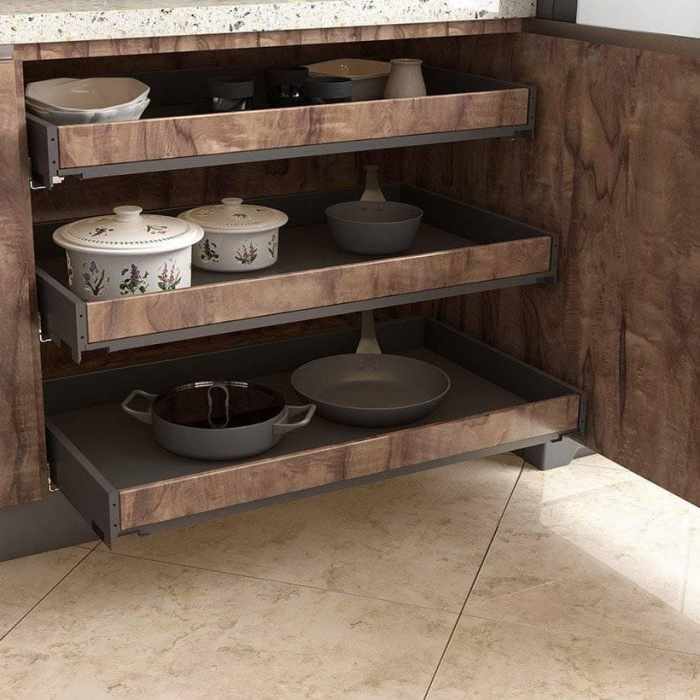
Small kitchens often present a significant storage challenge. Maximizing limited space requires creative solutions and careful planning. Effective storage not only keeps the kitchen organized but also enhances its functionality and aesthetic appeal. This section explores several innovative storage solutions designed to address the unique demands of compact kitchens.
Innovative Space-Saving Storage Solutions
The following table details five innovative space-saving storage solutions, outlining their materials, design features, and installation methods. These solutions offer a range of options to suit different kitchen styles and budgets.
| Solution | Material | Features | Installation |
|---|---|---|---|
| Pull-out pantry | Wood, metal, wire | Narrow depth, multiple shelves, smooth gliding mechanism, adjustable shelves | Replaces existing cabinet, requires careful measurements and potentially professional installation for complex systems. |
| Vertical spice rack | Metal, wood, acrylic | Narrow profile, tiered shelves, magnetic or adhesive mounting | Mounted on interior cabinet doors or walls; simple DIY installation for most designs. |
| Under-sink organizer | Plastic, metal, bamboo | Adjustable compartments, tiered shelves, pull-out drawers, often utilizes otherwise wasted vertical space. | Fits within existing under-sink cabinet; typically simple DIY installation. |
| Magnetic knife strip | Stainless steel, magnetic backing | Holds knives securely, frees up drawer space, adds a sleek modern look. | Mounted on a wall or cabinet; simple DIY installation. |
| Stackable canisters | Glass, ceramic, stainless steel | Airtight seals, stackable design, labeling options, allows for clear visibility of contents. | Placed on shelves or countertops; requires no installation. |
Comparison of Space-Maximizing Storage Solutions
Pull-out shelves, corner cabinets, and vertical storage units each offer unique advantages in maximizing kitchen space. Pull-out shelves, often installed in base cabinets, provide easy access to items stored in the back, eliminating the need to rummage. Corner cabinets, while traditionally underutilized, can be equipped with specialized pull-out or revolving shelves to access items efficiently. Vertical storage units, such as tall pantry cabinets or wall-mounted shelves, utilize otherwise wasted vertical space, making them particularly effective in small kitchens.
While pull-out shelves are excellent for base cabinets, vertical units are better suited for maximizing wall space, and corner units solve the challenge of accessing difficult-to-reach areas. The most effective solution often depends on the specific layout and dimensions of the kitchen.
Small Kitchen Layout Incorporating Space-Saving Solutions
This design incorporates a galley kitchen layout to maximize space efficiency. A pull-out pantry is integrated into one of the galley’s long walls, providing ample storage for dry goods and minimizing wasted space. Vertical storage units are incorporated on the opposite wall, including tall cabinets for dishes and cookware and a narrow, wall-mounted spice rack. Finally, an under-sink organizer maximizes the space under the sink, allowing for efficient storage of cleaning supplies.
This arrangement allows for seamless workflow and optimizes the available space, creating a functional and organized small kitchen. The pull-out pantry offers easy access to frequently used items. The vertical units utilize the wall space effectively, and the under-sink organizer prevents clutter beneath the sink.
Space-Saving Kitchen Appliances
Maximizing space in a small kitchen often requires strategic appliance choices. Compact and multi-functional appliances are key to achieving an efficient and comfortable cooking environment without sacrificing functionality. Careful consideration of appliance type – built-in versus freestanding – is also crucial for optimal space utilization and aesthetic appeal.Choosing the right appliances can significantly impact your kitchen’s efficiency and overall feel.
The following section explores several space-saving options and compares the advantages and disadvantages of built-in versus freestanding models, along with a discussion on energy efficiency.
Examples of Compact and Multi-Functional Kitchen Appliances
Several appliances are designed specifically to minimize footprint while maximizing utility. These appliances offer a blend of functionality and compact design, perfect for small kitchens.
- Compact Dishwasher: These dishwashers are significantly smaller than standard models, often accommodating fewer place settings (e.g., 6-8 settings). They offer the convenience of automated dishwashing without consuming excessive space. Benefits include reduced water and energy usage compared to hand-washing, and a significant time-saver.
- Combination Microwave Oven: This appliance combines the functionality of a microwave and a conventional oven in a single unit. It’s a space-saving solution, eliminating the need for two separate appliances. It offers versatility in cooking methods, accommodating various cooking styles and recipes. However, it may lack the precise temperature control of a dedicated oven.
- Mini Refrigerator: Ideal for smaller households or as a supplementary refrigerator, mini-refrigerators offer a smaller footprint compared to full-sized models. They are particularly useful for storing drinks, snacks, and frequently accessed items. They consume less energy compared to larger refrigerators, but have limited storage capacity.
- Compact Blender: Personal blenders are designed for individual servings and occupy minimal counter space. They are ideal for smoothies, shakes, and small batches of blended ingredients. Their smaller size makes them convenient for quick preparation and easy cleaning. However, they may not be suitable for large batches or thicker mixtures.
- Slow Cooker/Multi-Cooker: Slow cookers or multi-cookers, depending on the model, can offer a variety of cooking functions in a single compact unit. They are ideal for preparing stews, soups, and other slow-cooked meals, freeing up stovetop and oven space. Their low energy consumption is a significant advantage, although cooking times are longer than with other methods.
Built-in versus Freestanding Appliances
The choice between built-in and freestanding appliances significantly impacts both the functionality and aesthetics of a small kitchen.Built-in appliances are designed to be integrated into cabinetry, creating a seamless and streamlined look. This maximizes space utilization by eliminating gaps and maximizing storage opportunities. However, built-in appliances can be more expensive and may require professional installation. Replacement can also be more complex and costly.
Freestanding appliances, on the other hand, offer greater flexibility in placement and are generally less expensive. They are also easier to replace or move should your needs change. However, they may not integrate as seamlessly into the kitchen’s design, and can take up more visual space.
Energy Efficiency of Space-Saving Appliances
Space-saving appliances often boast improved energy efficiency compared to their larger counterparts. Manufacturers often prioritize energy-saving features in smaller models to offset the perceived disadvantage of reduced capacity. For example, a compact dishwasher may use less water and energy per cycle than a standard-sized model due to optimized washing cycles and smaller tank capacity. Similarly, smaller refrigerators generally consume less energy due to reduced internal volume.
However, it’s crucial to check the energy efficiency rating (e.g., Energy Star rating) before purchasing any appliance to ensure it meets your expectations for energy conservation.
Space-Saving Kitchen Design Principles
Maximizing space in a small kitchen requires a strategic approach to design. By thoughtfully applying key principles, you can create a functional and visually appealing space that feels significantly larger than its actual dimensions. This involves careful consideration of color palettes, lighting, and the placement of key elements within the room.
Five Key Design Principles for Creating the Illusion of More Space
Effective space-saving kitchen design hinges on creating the perception of openness and airiness. The following five principles are crucial in achieving this goal.
- Light and Bright Color Palettes: Light colors, such as whites, creams, pastels, and light grays, reflect light, making the room feel brighter and more spacious. Avoid dark colors which absorb light and visually shrink the space. For example, a kitchen with white cabinets and light beige walls will appear significantly larger than one with dark brown cabinets and navy blue walls.
- Minimalist Approach to Decor: Clutter is the enemy of space. A minimalist approach, focusing on clean lines and uncluttered surfaces, creates a sense of openness. Instead of many small decorative items, consider a few statement pieces. For instance, a single, large piece of artwork can be more effective than several smaller prints.
- Strategic Use of Mirrors: Strategically placed mirrors can visually double the size of a room by reflecting light and creating a sense of depth. A large mirror placed opposite a window, for example, will reflect natural light and expand the perceived space.
- Maximize Vertical Space: Utilize vertical space with tall cabinets that reach the ceiling, maximizing storage and minimizing floor clutter. Open shelving can also add visual height, but should be used sparingly to avoid overwhelming the space. Consider a tall pantry cabinet reaching to the ceiling to store dry goods, freeing up valuable counter space.
- Multifunctional Furniture: Choose furniture that serves multiple purposes. A kitchen island with built-in storage, for instance, can act as a workspace, dining area, and storage solution all in one. A fold-down table that can be tucked away when not in use is another example of efficient space utilization.
Three Common Design Mistakes That Make Small Kitchens Feel Cramped
Certain design choices can inadvertently make a small kitchen feel even smaller. Avoiding these common mistakes is crucial for creating a comfortable and spacious environment.
- Overcrowding with Furniture: Too much furniture, especially bulky pieces, can make a small kitchen feel claustrophobic. Careful planning and selection of appropriately sized furniture are essential. For example, avoid oversized kitchen tables and chairs that leave little room for movement.
- Ignoring Natural Light: Obstructing natural light sources, such as windows, with heavy curtains or bulky furniture, significantly reduces the sense of space. Opt for sheer curtains or blinds to allow maximum light penetration. For example, heavy velvet curtains will absorb light and make the room appear darker and smaller.
- Using Dark or Busy Colors: Dark colors absorb light, making a room feel smaller and more enclosed. Similarly, busy patterns can overwhelm a small space. Sticking to light, neutral colors and simple patterns helps to create a sense of calm and spaciousness. For example, a small kitchen painted in a dark brown will feel much smaller than one painted in a light cream color.
Visual Description of a Small Kitchen Effectively Using Light and Color
Imagine a small kitchen bathed in soft, natural light streaming through a large window. The walls are painted a warm, creamy white, reflecting the light and creating a bright, airy atmosphere. The cabinets are a pale grey, offering a subtle contrast to the walls without overwhelming the space. A large, rectangular mirror is positioned opposite the window, doubling the effect of the natural light and creating a sense of depth.
Recessed lighting is strategically placed throughout the ceiling to provide even illumination, complementing the natural light. A few strategically placed pendant lights above the island provide task lighting and add a touch of style. The overall effect is a bright, spacious, and inviting kitchen that feels much larger than its actual size.
Space-Saving Kitchen Organization Techniques
Maximizing space in a small kitchen requires a strategic approach to organization. Effective organization not only creates a visually appealing space but also significantly improves efficiency and workflow. This involves thoughtful placement of items, utilizing vertical space, and regularly decluttering to prevent accumulation. By implementing these techniques, even the smallest kitchen can feel spacious and functional.
Effective Methods for Organizing Kitchen Items
Efficient organization of utensils, cookware, and food items is crucial in a small kitchen. Three effective methods, focusing on vertical space, strategic placement, and categorization, can dramatically improve storage.
- Vertical Storage and Stacking: Utilize vertical space by stacking items strategically. For example, stackable containers for dry goods like pasta and rice maximize shelf space. Use drawer dividers to create vertical sections within drawers, allowing for the stacking of plates and cutting boards. Pot lids can be stored vertically in a designated drawer or on a wall-mounted rack, instead of nesting them haphazardly inside pots.
- Categorization and Zoning: Group similar items together in designated zones. For instance, dedicate one drawer exclusively to cooking utensils, another to baking tools, and a third to cutlery. This makes items easy to locate and minimizes searching. Similarly, group food items by category (e.g., grains, canned goods, snacks) on shelves or in the pantry. This visual organization enhances efficiency and prevents clutter.
- Utilizing Hidden Spaces: Maximize often-overlooked spaces. Install pull-out shelves in cabinets to make accessing items at the back easier. Utilize the space under the sink with pull-out organizers or tiered shelves for cleaning supplies. Magnetic strips on the inside of cabinet doors can hold frequently used knives or other metal utensils, keeping them readily accessible while saving counter space.
Comparison of Kitchen Organization Systems
Several systems can be employed to enhance kitchen organization, each with its own advantages and disadvantages.
| Organization System | Advantages | Disadvantages |
|---|---|---|
| Drawer Dividers | Creates customized compartments, prevents items from shifting, maximizes drawer space. | Can be expensive depending on the material and complexity, may not fit all drawers. |
| Shelf Risers | Doubles shelf space, allows for stacking, creates vertical storage. | May not be suitable for all shelf sizes or types, can limit access to items on lower shelves. |
| Hanging Organizers | Utilizes vertical space, keeps items readily accessible, ideal for pantry doors or cabinet interiors. | May not be suitable for all cabinet types or sizes, can reduce overall cabinet space if not carefully planned. |
Benefits of Decluttering and Purging
Regular decluttering and purging are essential for maintaining an efficient small kitchen. By removing unused or infrequently used items, you free up valuable space and improve workflow. For example, discarding expired food items, donating seldom-used kitchen gadgets, and removing duplicate items will create a more organized and functional environment. A decluttered kitchen promotes better hygiene and reduces the time spent searching for items.
The process itself can be therapeutic and contribute to a more relaxed cooking experience.
Ultimately, creating a space-saving kitchen isn’t about sacrificing style or functionality; it’s about strategic planning and the thoughtful selection of solutions. By incorporating innovative storage, efficient appliances, and smart design principles, you can transform your small kitchen into a highly efficient and visually appealing space that reflects your personal style and culinary needs. Remember, even the smallest kitchen can be a haven of culinary creativity with the right approach.
Quick FAQs
What are some affordable space-saving solutions?
Affordable options include shelf risers, drawer dividers, over-the-door organizers, and tension rods for hanging utensils. Repurposing items like jars and baskets for storage can also be cost-effective.
How can I improve kitchen airflow in a small space?
Ensure adequate ventilation by using a range hood effectively, opening windows when possible, and considering a small, energy-efficient fan to circulate air.
What are the best materials for space-saving kitchen storage?
Durable and easy-to-clean materials like stainless steel, bamboo, and melamine are ideal for high-traffic areas. Consider the overall kitchen style when choosing materials.


